
Legends
Gulzar and Women in His Words – Story of Meeta and Mansi
Story of Meeta and Mansi –
Khamosh sa afsana
Paani pe likha hota
Na tumne kaha hota
Na humnein suna hota…
There are relationships where most important emotions remain unspoken. The confrontations are best expressed through silence and who understands silence better than Gulzar. He has an eye for silences that exist between people and relationships, for the unsaid expressions. That’s why he writes –
Honth kuch kehte nahin
Kaanpte hothon pe magar
Kitne khamosh se afsaane
Ruke rehte hain…
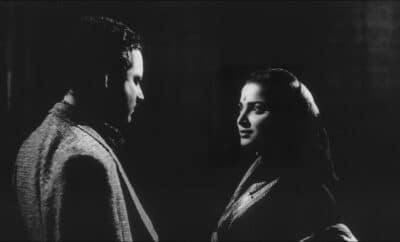
It is this silence in relationships that becomes almost another character in Basu Bhattacharya’s Anubhav (1971) and Griha Pravesh (1979). The discord in these marriages is felt in pauses, in the things left unsaid between two people. Gulzar gives words to those pauses. He gives words to the psyche of two women, Meeta and Mansi.
Both women represent two very different aspects of love and femininity. One is rooted in stability and the other in possibility.
Meeta – Meeta (Tanuja) is a woman who has become a stranger in her own marriage but her conflict is not betrayal or poverty, it is the emotional distance. She is introspective and rather than blaming circumstances she tries to find what has gone missing from the relationship. She makes conscious choices and is an independent thinker. Meeta doesn’t wait for the change to happen. She organizes her life. She is spontaneous and playful.
Mansi – Mansi (Sharmila Tagore) is sensitive and quietly resilient. She is not the regular sacrificial wife of Hindi cinema, but she is warm and nurturing. A woman, who finds joy in ordinary routines. She is aware and understands the financial struggles of her husband but she is not submissive. When she is face to face with something as bad as betrayal, she responds with dignity and quiet self-respect. She doesn’t explode. She represents the type of love which is built through shared responsibilities, a lot of compromises and togetherness. Hers is an enduring companionship. Her affection lies in the routine care, yet Mansi also is a stranger in her own marriage.
The most important difference between these two women – that Meeta, quietly creates the change and Mansi, quietly bears the pain. But both of them neither seek liberation from the marriage nor do they accept the unhappy situation in life. They face the situation with honesty, tenderness and effort.
Gulzar’s women, even in words, are rarely loud and aggressive. They seek honest relationships.
The two songs, though written years apart , almost seem to converse with each other.
Mera dil jo mera hota
Palkon pe pakad leti
Hothon pe utha leti
Haathon mein Khuda hota….
The song celebrates a woman who has rediscovered herself within the space of marriage. Meeta is alone in the house, getting ready, having a bath, humming to herself and enjoying her own company. Her happiness is deeply personal and the song very well indicates it. She has rekindled the warmth in her relationship and in turn rekindled her own spirit. The song is all about the feminine confidence.
Her confidence sings –
Sooraj ko masal ke main
Chandan ki tarah malti
Sone ka badan lekar
Kundan ki tarah jalti
Iss gore se chehre par
Aaina fida hota…
She has the confidence of bringing the entire world at her feet yet she is happy in her own small world.
For Gulzar, a woman’s identity does not fade or diminish in love, rather it helps her to blossom. By giving affection freely, Meeta has not lost herself, she has found herself.
Pehchaan toh thi
Pehchaana nahin
Maine apne aap ko
Jaana nahin….
Years later, Gulzar presents the mind of a woman who is standing at the opposite end of the emotional journey. Mansi has been hurt by a betrayal. It is then that she understands that before love can return to her, she must first find her own identity. Gulzar does not portray Mansi as the vindictive woman. He gives her dignity. She seeks to rediscover what she once was. Before nurturing a relationship, she must nurture herself. She starts by going to a salon for transformation. Why salon? Because it is often considered as identity shedding.
Her search for herself sings –
Jab dhoop barasti hai sar pe
Toh paanv mein chhaanv khilti hai
Main bhool gayi thi,
Agar chhaanv milti hai, toh dhoop mein milti hai
Iss dhoop aur chhaanv ke khel mein kyun
Jeene ka ishara samjha nahin…
She refuses to let betrayal become her identity. Instead of desperately trying to hold onto the relationship, she embarks on a quiet journey to rediscover herself. The woman within. Gulzar, here, hints that self-recognition is the first step towards emotional healing.
Through these songs, Gulzar portrays two women –
One finds strength in rebuilding a marriage, the other in rebuilding herself. In both cases, there’s no bitterness, there’s no self pity. For him, the strongest women are those who preserve their inner grace even at the most fragile moment. Meeta acts before her marriage breaks, Mansi acts after the trust has been already broken.
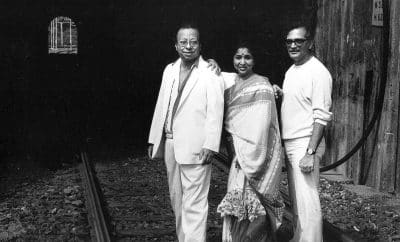
And then there are these two voices – Geeta Dutt and Chandrani Mukherjee. They complete Meeta and Mansi. They bring an intimate quality to Gulzar’s lyrics. Geeta Dutt’s voice has warmth and spontaneity that suits Meeta’s quiet happiness. Chandrani Mukherjee’s voice brings the reflective quality that carries Mansi’s uncertainty. Kanu Roy’s music gives a lasting impression. Kano Roy was always a man of few instruments. His tunes bring out the delicate nature of the songs beautifully.
Through Gulzar’s lyrics, these journeys find a voice. Tender and strong at the same time. Two songs, two women, two shades of emotion and Gulzar’s lyrics helping them find way through the silences of marriage.


Patmaj
August 19, 2026 at 8:18 pm
Beautifully expressed…a lovely and unique topic to write on…and so beautifully written…Was a pleasure to read this and savour this
Deepa
August 19, 2026 at 9:24 pm
Thank you, Pratik. So glad you enjoyed reading this. Meeta and Mansi have their own world apart from the one shown in the movie.